All in the race, but…

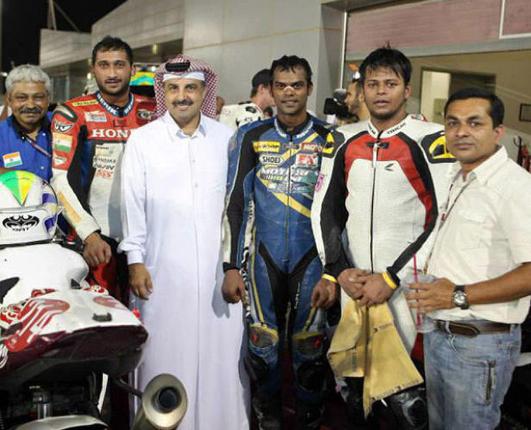
Rajini Krishnan (third from the right) won the overall championship in the Losail road racing series in Qatar / Photo by Special Arrangement / The Hindu

The Madras Motor Race Track will vroom with life from July 12 to 14 when the Petronas Asia championship will be held. Though top Indian racers are to participate, one wonders how well-equipped they are to compete with their international counterpart.
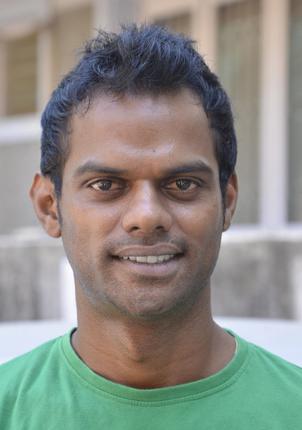
The National 600cc bike racing champion K. Rajini. / Photo: S.S.Kumar / The Hindu

When India’s Rajini Krishnan was crowned the overall 600cc champion in the Losail Asian road racing series held in Qatar last month, few noticed his admirable feat; there was hardly any space devoted by the media to the 32-year-old’s achievement. Not that Rajini was dejected. He had long known that two-wheelers have always been given short shrift by many stakeholders in the sport.
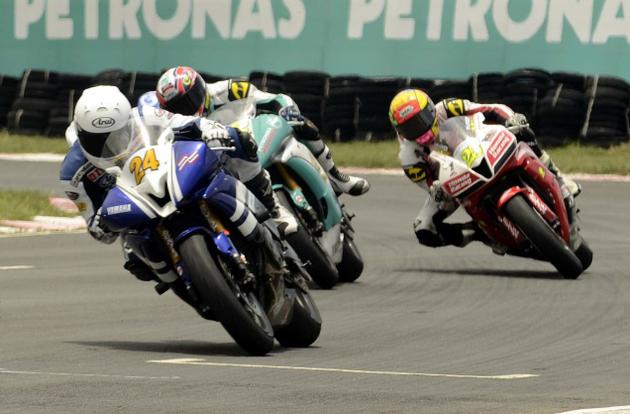
Decha Kraisaart who won the supersports 600cc category at the Petronas Asia Road Championship 2011 held in Irungattukottai, near Chennai /  Photo: S. R. Raghunathan / The Hindu
Decha Kraisaart who won the supersports 600cc category at the Petronas Asia Road Championship 2011 held in Irungattukottai, near Chennai / Photo: S. R. Raghunathan / The Hindu

Now, when the third round of the Petronas Asia road racing championship makes its fourth visit to the country (Chennai) at the Madras Motor Race Track from July 12 to 14 after a two-year gap, you’d imagine Rajini to be one of the favourites at the Asian event in the 600cc category, but that’s not so. “In Qatar, in the 600cc category, all the participants were given the same Yamaha 2005 bike model, whereas here the 2008 Yamaha is the model that Indians will ride, while top international riders will be astride the latest 2013 models. That makes a huge difference,” explains Rajini.

Old models

Some of the top Indian riders have been facing this problem for quite a while. Though it would be unfair to blame manufacturers in the country for not supporting the Indians with the latest of bikes (600cc) during International events because they believe it’s not commercially feasible, drivers are right when they say that riding old models while their foreign counterparts race on the latest ones proves to be a great disadvantage for them.

Vicky Chandhok, president, Federation of Motor Sports Clubs of India, feels that with Bajaj, Mahindra and Hero (of Hero Honda) entering the two-wheeler market, the sport will see exciting times. The 54-year-old is of the view that the day is not far off when a rider riding for a particular manufacturer will be treated as an employee. “As far as two-wheeler markets go, India is second only to China. There is a market here that’s waiting to be explored. I wish with events such as the Petronas Asia championship riders can survive by taking part in championships alone,” he says. “There are several drivers who can ride the 600cc SuperSports category, but we need manufacturers to provide them with machines,” he adds.

Started in 1996, the Petronas Asia road racing championship has been in the forefront of bringing Asian motorcycle champions together on the same stage. As the event grew bigger, the 600cc SuperSports category (similar to its class in the World SuperBike championship) has become the showpiece race with the best Asian racers taking part in it.

The top GP riders, Chris Vermeulen, Ratthapak Wilairoj and Doni Tata Pradita, have at one stage or the other taken part in the Petronas Asia championship. Can the Indian drivers ever reach the level where they can match their Asian counterparts? “Yes”, says Rajini, “provided we are trained regularly abroad and take part in more events around the globe.”

R. Deepak, who finished second to Rajini in the Losail series in Qatar, echoes the same view. “I am riding a 2007 model bike for this championship, whereas the top bikers from Malaysia and Indonesia are riding the latest model. They are improving day by day. They train almost everyday. In a year, the top riders take part in 25-30 races, while we participate in only 4-5 races. We lag behind in all aspects. We need to train and compete abroad.”
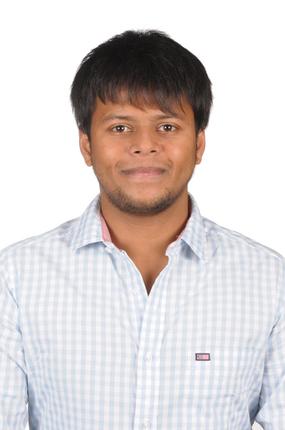
R. Deepak who finished second in the Losail championship

Deepak rues the lack of support from Indian manufacturers. Concurs Rajini: “Racers from Malaysia and Indonesia ride the best bikes with support from manufacturers such as Yamaha and Honda. If we get the same support from Indian manufacturers — Yamaha and Honda — it would be great.”

If the Indian manufacturers could somehow find the finances to support the 600cc (and other categories) riders in major competitions in India and abroad, the day would be not far off when India would have a homegrown champion we could brag about.

source: http://www.thehindu.com / The Hindu / Home> News> Cities> Sports> Chennai / by K. Keerthivasan / July 10th, 2013
Bring out the Madrasi in you

With hardly a month for Madras Week celebrations, organisations such as the INTACH and Rotary Clubs have already planned their events.

The celebrations will kick-start on August 18 and go on till August 25 or even further.

“We have already confirmed around 20 events by various groups in various parts of the city. Last year we had about 160 events happening across the city for about a month. We hope to have more this year,” said Vincent D’ Souza,  journalist and one of the voluntary coordinators for the event.

Historian and journalist S Muthiah urged more participation from the northern and western parts of the city. “The Madras Week celebrations have mostly been restricted to the southern and central parts of the city. We hope there would be more events from the other parts such as Royapuram, Kilpauk and Annanagar. Some of the most important historical sites are in these areas,” he said.

Volunteers also hoped that more people would come forward to organise events like walks, seminars and innovative fun events in their own locality. “Last year the ‘Mint Food Walk’ conducted by women in the Sowcarpet area was a huge hit, so much so that we are hoping to have two of those this year. This year, we hope to see at least one city walk happening everyday during the Madras Week celebrations and about five to six of them on the weekends,” said Vincent D’Souza.

Volunteers, who are interested in conducting such programmes, can contact coordinators for publicity, advice, and also for assistance in arranging venues. The events will be put up on the Madras Day website. All sorts of communities, schools, colleges, business houses or others can take up their own events to mark the day.

(Those interested can contact editor@madrasmusings.com or themadrasday@gmail.com. For more information on the events, visit www.themadrasday.in.)

source: http://www.newindianexpress.com / The New Indian Express / Home> Cities> Chennai / by Express News Service – Chennai / June 22nd, 2013

Chennai boy tops JEE in Tamil Nadu; girls shine

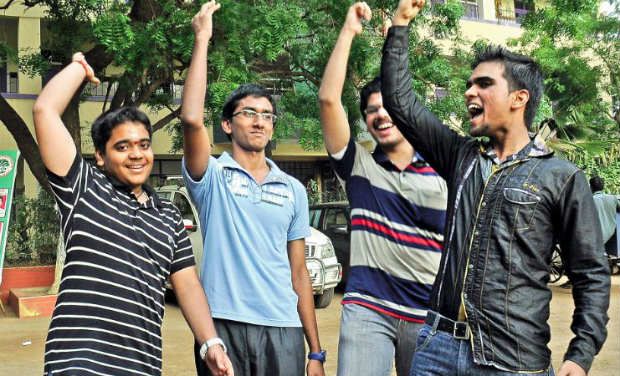
Sooraj Narayan, Aravind Akshan, Ajay Kumar and Kannan celebrate after topping IIT-JEE (advanced) on Friday at Chetput. — DC
Chennai:
Hyderabad boy Pallerla Sai Sandeep Reddy topped the Joint Entrance Exam­ination (Advanced) this year with the all-India first rank. Suraj Narayan from Chennai stood first in Ta­mil Nadu with 433 of 2,500 who appeared from the sta­te clearing the ex­am. The­re are 630 girl students who have qualified for co­u­nselling in IIT Ma­dras th­is year, a larger nu­mber th­an last year.
Speaking to DC on Fri­day, Prof R. Sarathi, chairman, IIT-JEE organising committee, Chennai zone, said about 1.2 lakh students from various parts of the country wrote the JEE (Advanced) of which 18,000 qualified to sit for counselling. “There are 9,885 seats available in 16 IITs and Indian School of Mines, Dhanbad. Students should select as many courses as possible on the counselling website, which will be kept open from June 23 to 30. A top-ranking student missed his IIT seat last year as he had filled in fewer options,” he said.
Pointing out that 36 students from the IIT Madras zone figure in the top 100 rankers’ list, Prof Sarathi said, “The number of those clearing the exam is certainly higher than last year. As many as 3,652 candidates have qualified to take up counselling for a seat in IIT, Madras. Counselling will take place between July 4 and 8 at individual IITs,” he added.
There are 48 students from the SC and ST categories who have been shortlisted for the one-year preparatory course on the basis of further relaxation of admission criteria. IIT Delhi, the JEE organising institute, decided to release the results on Friday itself (rather than June 23) to give students time to decide on courses.
About1.5 lakh students were short-listed from JEE (Main) for the advanced test. This year, the IITs had devised a new method whereby students needed to be on the top 20 percentile of their board.
AP students top IIT
Two students from Andhra Pradesh have topped IIT’s Joint Entrance Examina­tion (advanced)  and city boy Sooraj Narayan has scored the highest among students in Tamil Nadu.
While Andhra Pradesh students Sai Sandeep Reddy and A. Ravichandra scored  332 and 330 out of 360 marks, Sooraj scored 287.  The results announced on Friday were not a let down for the city as 36 students from the IIT-Madras figure among the top 100 rankers and 18,000 students  have qualified for counselling beginning on July 4, going by Prof  R. Sarathi, chairman, IIT-JEE organising committee, Chennai zone.
As many as 433 candidates from Tamil Nadu have cracked the entrance test this year and 48 SC and ST students have been shortlisted for the preparatory course of one year following further relaxation of the admission criterion.  IIT -Delhi, the JEE organising institute, had  planned to release the results on June 23 but later decided to announce them on Friday for the convenience of students.
IIT toppers share their dreams 
D. Senthil Natarajan|DC
It was a memorable day for city boy Sooraj Narayan, as he stood first among students who took IIT’s joint entrance examination (JEE-advanced) from Tamil Nadu. Sooraj who secured all India 54th rank had scored 287 out of 360 marks in the entrance examination.
“I will pursue mechanical engineering,” said an ecstatic Sooraj, who cleared with a score of 411 out of 450. “I spent four hours daily to prepare for JEE,” Sooraj said, but later clarified that was after reaching home by 6.00 pm.
But it was a different case with Aravind Akshan (AIR- 91) who was from a matriculation school, at Madurai, and shifted to a CBSE school here, in Chennai. “I felt the CBSE education easier than the matriculation pattern,” he said.
Another topper who gave up Facebook for the exams was R. Ajay Kumar (AIR- 420). “I would now prefer electrical or mechanical in IIT,” he said adding that it was tough reaching the top.
“Staying away from distraction was a tough task,” said V. Kannan (AIR- 453) but added “But I had enough of entertainment in my class 9 and 10 and hit the saturation, which helped me study with ease.”
source: http://www.deccanchronicle.com / Deccan Chronicle / Home> News> Current Affairs / DC / by N. Arun Kumar / June 22nd, 2013

Caring for books

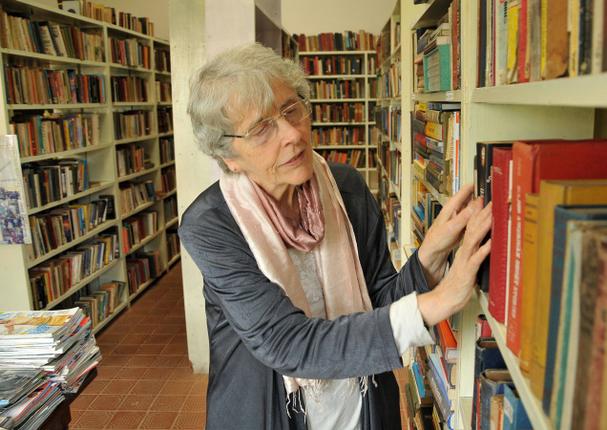
BIBLIOPHILE: Margaret Sekhran. / Photo: S. James / The Hindu

Margaret Sekhran says that people do not notice a good library because it is always there, like the KMU Library in Kodaikanal since 1890.

“Kodi was like a health resort then,” says Margaret Sekhran about Kodaikanal of 1965.

She remembers the peace and mist all around, the pleasure she derived walking around the lake where a handful of people sat and played the flute.

“That charm of the hill station is gone today”, she rues. Now, there are more people, more buildings, more vehicles, more noise, more garbage and pollution.

But there is one nook in the hill town that still brightens up the 77-year-old’s face. It is the Kodaikanal Missionaries Union (KMU) Library housed inside the Kodaikanal International School (KIS) campus.

The library is 123 years old and Margaret’s association with the heritage hotspot is 46 years old. She first visited and used the library in 1967. In 1978 she became its honorary member and ever since has been “helping the library in every possible way.”

Life for Margaret has come full circle. When she was a child, her father built a library in a van and took it around Derbyshire. “It was a storehouse of classics,” she recalls.

Today, Margaret as a Trustee of the KMU library takes care of its priceless collection of 7,000-plus books.

“We still have some old valuable books from 1890,” Margaret finds it hard to contain her excitement as she shows me around the tiny little room neatly stacked with rows of shelves filled with books.

“A good library,” she smiles, “will never be neat” and pulls out copies of The Bible in French, Spanish and Hebrew, a beautifully illustrated book on Paris…all from the previous century.

“Most of our books have been donated by missionaries, past and present members, visitors and the KIS. We buy them occasionally, our collection includes a wide genre of books,” she says.

Fond of reading, Margaret has added the “India section” with lots of books on leaders of freedom movement and biographies of several unusual people. She also introduced the “talking” concept where members assemble for two hours twice a week (Wednesdays and Saturdays) to discuss old and new books and for a friendly exchange of opinions.

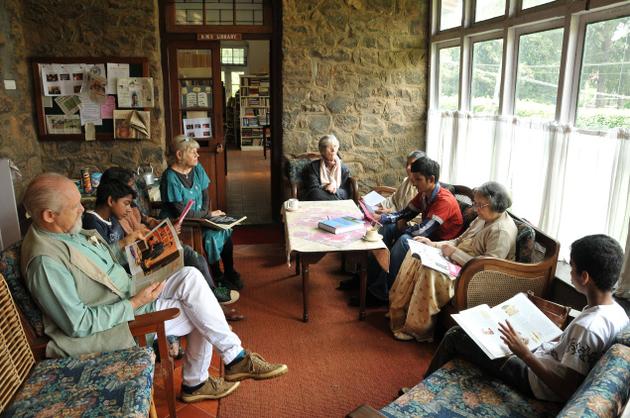
Library members interact. / Photo: S. James / The Hindu

“Our members are spread across the country,” says Margaret, “and many times even if they are on a holiday or official visit to Kodi, they drop in for these chat sessions.” Many people also bring along friends who become members. “I also want all the new people coming and settling in Kodi to join us,” she says. Margaret is also particular about encouraging reading habit among children and always requests her members to come with their families to the library.

For Margaret it has been an enjoyable experience to see the group of library members develop into a core group of ‘regulars’ with others dropping in and out from time to time. The annual fee of Rs.100 remains static to make it affordable.

“By doing this work,” says she, “I feel I am offering a service.” “It is my endeavour to ensure that every book, old or new, damaged or voluminous, is of use and is not destroyed,” she adds.

At present Margaret is busy cataloguing the library. “It’s a hands-on work and I do it with whoever is willing to volunteer.” She feels it is necessary to make the historic KMU library representative of what it is, who the members are and what are the benefits. “We have three well known novelists as members,” she gushes, “and it is the wonderful individuals who provide the personality of our group.”

The KMU was formed in 1890 to enable missionaries of the various denominations to come together for recreation and to develop mission strategy and outreach in cooperation with each other.

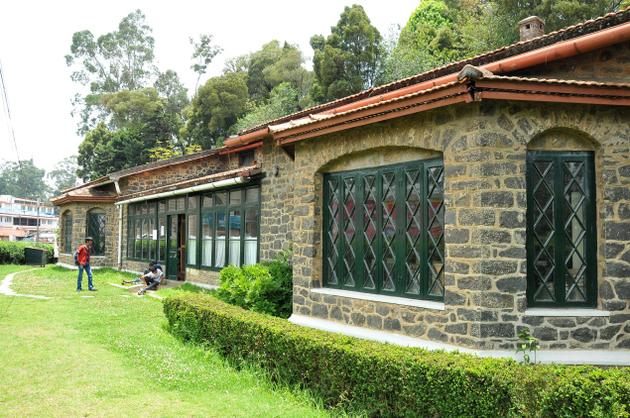
The library building./  Photo: S. James / The Hindu
The library building./ Photo: S. James / The Hindu

In 1923 an Edwardian style clubhouse was built with a large central hall for social events and afternoon teas, tennis courts, a reading and other meeting rooms. With the decline of missionary activity in India, the KMU was wound up in the 1980s, and the property was turned over to KIS. The KMU library, maintained by the KIS, continued to function from the single room and has become something of a social venue over the years. “It is perhaps the most influential club throughout Kodai’s history,” beams Margaret, a social worker who came to India post-marriage in 1962. Before the KMU Library grabbed her, Margaret started the Ladies Circle in Chennai in 1970 and did lot of voluntary work with refugees and children of slum dwellers. After coming to Kodaikanal, she launched herself on a self-assigned mission of planting shoal trees.

To know the past through books kept returning her to the library. “A library just has to provide,” she says, “it need not be big or beautiful, with more staff or users.”

It is Margaret’s desire to keep adding books to the library’s present volumes. Aware of technology taking over and more people reading online, she says, “I hope physical books will continue to stay for a long time.”

“Library is more than a repository of books,” Margaret describes, “it is a gathering place for people because they interact with each other.” Whether she is interacting with the young or old, regular or new visitors in the library or her pet Dalmatians and the hundreds of birds, trees, butterflies and flowers at home, it is them who make her life interesting.

“If you have a library and a garden, what else you need in life?” she asks. In her opinion both are wondrous places with the power to change lives and help you to look forward.

“They are the future,” she smiles, praying that the KMU library remains one such indispensable spots in Kodi always having what people need.

source: http://www.thehindu.com / The Hindu / Home> Features> MetroPlus / by Soma Basu / Madurai – July 04th, 2013

Tamils form first cultural association in China

Beijing:

Over 70 professionals from Tamil Nadu employed in Beijing and neighbouring areas today formed first Tamil association in China reflecting on growing numbers of Indians working there.

Beijing Tamil Sangamam was formed on the Tamil New Year’s day at a get-together here, Maria Michael, a broadcasting professional working in the Tamil service of state-run China Radio International (CRI), said.

This is the second association of Beijing-based Indians. The city already has a well established Beijing Malayalee Association which for over several years has become rallying point for south Indian cultural events there.

The new Tamil association would mainly focus on cultural events and get-togethers of the Tamils, Michael said.

A number of Beijing-based Tamil professionals from Tamil Nadu, Sri Lanka and Malaysia took part in today’s meeting.

CRI, which broadcasts in several foreign languages, also has a Tamil service employing a number of Indian as well as Chinese professionals specialising in Tamil language.

PTI

source: http://www.zeenews.india.com / ZeeNews.com / Home> World / Sunday – April 14th, 2013

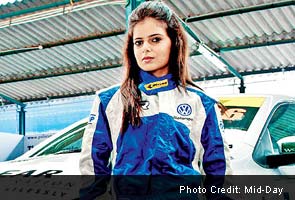
Alisha Abdullah – India’s only woman super bike racer

Photo Credit : Mid Day

Mumbai :

Alisha Abdullah is India’s only woman super bike racer and the fastest Indian car racer. With racing in her genes (her father RA Abdullah was a famous bike racer and seven-time national champion), Alisha is someone who gives the guys a run for their money. CS catches up with this feisty young lady who is all set for a tournament to be held in Hyderabad next weekend:

Who: Alisha Abdullah

What: Talking about her life as a racer

In prep mode

We had a race at Coimbatore two weeks back. I finished seventh out of 25 guys, which was pretty decent. In racing, you cannot be training with your bike/car throughout the year. It is very expensive. What you need to ensure whether your bike/car is at par with those of the others in terms of technology and mechanism. I do a lot of physical training in the gym to improve on my stamina, core strength, lower back and neck areas. The sport is too much for a girl to handle physically, so I need to workout really hard.

Daddy’s little girl

My interest in racing started when I was eight years old. My dad was a racer too and I was fascinated by the machine, speed, action, etc. I used to love it when he put on his suit. My dad got me a small bike as well. Later on, I tried my hand at go-karting and did very well. Slowly, racing developed into a passion. Finally, when my dad gifted me a 600 cc superbike on my 18th birthday, I knew that motorsports was my vocation.

Feminine side

Though people might think of me as this girl with a rock chic fashion sense like boots, leather jackets, denims, et all, I am not at all tomboyish off the track. I love wearing pretty dresses for evening events with jewellery as well. In fact, people get a surprise when they come to know that I am Alisha, the super biker (laughs out loud).

My inspiration

My dad has been my biggest supporter throughout. I have seen the kind of hard work and sacrifices he has made in his career. I am a huge fan of Virat Kohli. I love attitude and focus on his game. He doesn’t give a damn to what people say about him. I think that’s the greatest quality in a sportsman.

source: http://www.sports.ndtv.com / Home> Sports Home> Other Sports> More / by mid-day.com / Monday – July 08th, 2013

Leather firms in Ambur told to go green

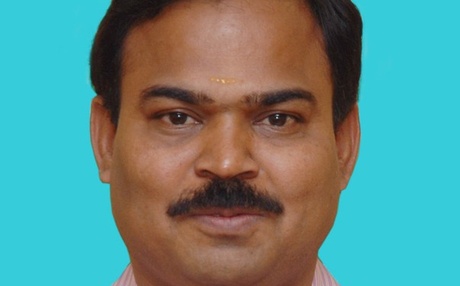
Sankar
Sankar

Collector P Sankar on Saturday made an appeal to the leather industry to focus on producing quality products at an affordable cost using clean technology.

The industry has advantages of using advanced technology though it suffers from pollution and unskilled labour, Sankar said  at the inauguration of the fourth edition of the ‘Ambur Open 4’, a two-day exhibition of components, accessories, finished leather, leather technology and machinery, organised by the Indian Shoe Federation at the Trade Centre at Ambur.

It is important for the country to move to better technologies as it has to compete with countries like China and Indonesia. The Collector said Indians had special respect for converting anything into useful products and they were rated as the best in terms of skills.

India produced around 200 crore square feet of leather every year and stood second in leather exports earning around `30,000 crore.

This industry also employed around 25 lakh persons, including 8 lakh women. K Vijayan, president of the ISF, said that the event was aimed at providing a trade and networking platform showcasing the very best of finished leather, footwear components, accessories and technology as well as shoe machinery, which is being exhibited for the first time.

The importance of being innovative and the need to constantly update products is a step to overcome product obsolescence and survive in the future. The fourth edition of Ambur Open 4 is a step in this direction, he noted.

R Ramesh Kumar, executive director of the Indian leather Export Council, said that while the export of leather had touched 5 billion dollars in 2012-13, the target would be doubled in the next five years. Ambur MLA Aslam Basha and director of CLRI A B Mandal were present on the occasion.

source: http://www.newindianexpress.com / The New Indian Express / Home> States> Tamil Nadu / by Express News Service – Vellore / June 30th, 2013

Kalam to teach at IIM-Shillong

Shillong :  (IANS):

Former President APJ Abdul Kalam will be lecturing students of Indian Institute of Management (IIM)-Shillong for three days on ways to make India an economically developed nation, the institute said.

“The students and faculty of IIM-Shillong are elated that Dr Kalam is coming to teach at the institute. I am sure his lectures would benefit not only our students but also faculty members,” IIM-Shillong Director Kaya Sengupta told IANS.

The lecture ‘Economically Developed Nation – How to Realise’ will go on from Sunday to Tuesday.

“The institute has arranged all the materials required for the lecture. He (Kalam) will belecturing second year students on ‘Economically Developed Nation – How to Realise’ from Sunday (June 23) to Tuesday (June 25),” Sengupta said.

While visiting the institute earlier on March 6, the former President had agreed to teach at the B-school.

“I am a teacher. As a professor, wherever knowledge takes me, I go. I like meeting young people and I would like to contribute to their knowledge,” Kalam told IANS. Kalam, who is also a visiting faculty at IIM-Ahmedabad, will guide the students individually as well as in groups.

After the lecture, students will be required to submit project proposals for creating scenarios based on multiple options for specific policy or institutional changes.

The faculty would comment on these proposals, and project teams would be able to consult subject matter specialists through invited lectures and interactions. Thestudents could even visit the experts.

source: http://www.assamtribune.com / The Assam Tribune / Home / by IANS / Shillong – June 23rd, 2013

The high-fliers

This year’s edition of Fly Your Ideas contest witnessed a tough battle between five teams who came up with innovative ideas for the aerospace and aviation sector, reports Sangeetha Nambiar from Toulouse, France

Abunch of bright young people have put their own spin on innovations and technologies that can offer solutions to deal with challenges in the aerospace sector. The ideas came up as part of Fly Your Ideas, a contest floated by Airbus, one of the world’s largest aircraft manufacturers. Fly Your Ideas is Airbus’ way of giving the younger generation a chance to come up with out-of-the-box ideas that could revolutionise the way the aviation industry works. “With the contest we look to create sustainable solutions for the future,” says Vicky Runchie, project leader for the contest. “We have multiple objectives which include focused research and development, new business models, better traffic management, meeting tough emission targets, protecting nature and nurturing future talent. The main idea being to reach out and connect with young talent,” she adds.

The third edition of the biennial contest, which was first started in 2008, witnessed a much higher participation this time with 6,000 entries which were whittled down to five by a team from Airbus. Challenges for contestants were huge as the criteria taken into account included energy, efficiency, affordable growth, traffic growth and passenger experience. UNESCO has offered its support to the contest as it is committed to the objective of reducing emission and promoting the idea of a greener planet.

The teams selected this year include: India (Team Avas from SRM University, Chennai ), Italy (Team Flybrid, Technical University of Milan), Brazil (Team Levar, University of Sao Paulo), Australia (Team CLiMA, Royal Melbourne Institute of Milan Italy) and Malaysia (Team Embarker, Universiti Putra Malaysia ), who headed to Toulouse in France for the finals where they presented their ideas before a jury of six at the Airbus  A380 final assembly line. Team Levar, which came up with an innovative design for a luggage loading and unloading system for airplane cargo compartments to reduce the workload of airport baggage handlers with an air cushion, walked away with the 30,000 euros prize money at the final award ceremony held at the Unesco building in Paris. Team CLi-MA won the runners-up spot for their proposal to develop aircraft fuelled by a blend of sustainably produced liquefied biomethane and liquefied natural gas (Bio-LNG ). Avas, the team from India, proposed the use of intelligent materials (shape memory alloys) for jet exhaust shape modification. The alloys are energised by harvested electricity generated by advanced thermoelectric materials using engine heat source which will reduce 6 to 7% of propulsion noise that an aircraft produces. “Airbus has over a period of time strengthened its relationships with universities across the world and FYI is one of its ways to engage the younger generation, assessing their ideas which are a refreshing change from those already in the industry,” says Rachel Schroeder, head of employment marketing.

The teams were a mix of technical and nontechnical. We want to encourage diversity in universities, ensure that more women  students are involved. In fact, Airbus proposes to introduce an award to increase diversity in classrooms. “Our objective is to increase a student’s knowledge base,” says Schroeder. According to Charles Champion, Airbus executive vice-president engineering, FYI patron and chair of the jury, “It was an extremely close contest. All the five teams came up with brilliant ideas. What finally swung the jury in Team Levar’s favour was their focus on the human element in the design apart from the innovativeness of the whole idea,” he says. “Airbus spends 2 billion euros annually on research and development. Any industry needs constant innovation to be sustainable. It is imperative that new and refreshing ideas are thrown up constantly. With FYI we have engaged with students in a big way,” he adds.

At a glance

The third edition of the biennial contest, which was first started in 2008, witnessed a much higher participation this time with 6,000 entries which were whittled down to five by a team from Airbus. Challenges for contestants were huge as the criteria taken into account included: energy, efficiency, affordable growth, traffic growth and passenger experience.

Courtesy: Educationtimes.com

source: http://www.articles.timesofindia.indiatimes.com / The Times of India / Home> Education / by Sangeetha Nambiar / June 24th, 2013

Coconut cultivation can be a lucrative option, says farm varsity V-C

Coconut cultivation can yield remunerative results through effective mechanisation, plant protection, and value addition, suggested a recently conducted seminar-cum-training programme on coconut cultivation and modern technologies, organised jointly under the aegis of Krishi Vigyan Kendra, Sikkal, and Coconut Research Station, Veppakulam, here in Vedaranyam.

Briefly touching upon the constraints faced by Cauvery Delta farmers, Dr. K. Ramasamy, Vice-Chancellor, TNAU, Coimbatore, in his keynote address spoke of technology-based diversification of cultivation. He stressed the need for selecting exclusive high-yielding coconut varieties for tender coconut, and copra production with high oil content and value addition.

Farmers were urged to form the coconut producers’ organisation with the support extended by NABARD. In a move to diversification, the Vice-Chancellor urged farmers to venture into production of value-added products from coconut through “secondary agriculture approach”.

Coconut is cultivated in all the districts of Tamil Nadu with Cauvery Delta Zone contributing to about 62,000 hectares of land. Nagapattinam holds about 4,100 hectares of land under coconut cultivation predominantly in Veppankulam coastal area.

Chairing the seminar, Collector T. Munusamy spoke on the importance of coconut cultivation and requested the coconut growers of the district to utilise the schemes available through the Department of Agriculture and the Coconut Development Board, Kochi. He requested the TNAU and its scientists to render periodic technological support on the latest innovations in coconut production. The District Collector released a Tamil booklet on Coconut Cultivation — Modern Technologies.

The training programme on coconut production technologies employed the use of visual aids by the scientists of Coconut Research Station, Veppankulam. The sessions entailed demonstrations on coconut manure, plant protection, root feeding of TNAU coconut tonic and use of TNAU coconut climber under the aegis of the scientists of KVK, Sikkal, were organised by the KVK, Sikkal, Nagapattinam scientists.

The inaugural sessions witnessed participation from C.V. Sairam, Principal scientist, ICAR, Bangalore.

U. Rajendran, Joint Director Agriculture, Nagapattinam; R. Rajendran, Professor and Head, KVK; Paramasivam, Field Officer, Coconut Development Board, Chennai; S. Mohandas, Professor and Head, CRS, Veppankulam; M. Karthikeyan, Assistant Professor, KVK, Sikkal, were present.

source: http://www.thehindu.com / The Hindu / Home> News> Cities> Tiruchirapalli / by Staff Reporter / Nagapattinam – June 24th, 2013