Second-hand sandhai

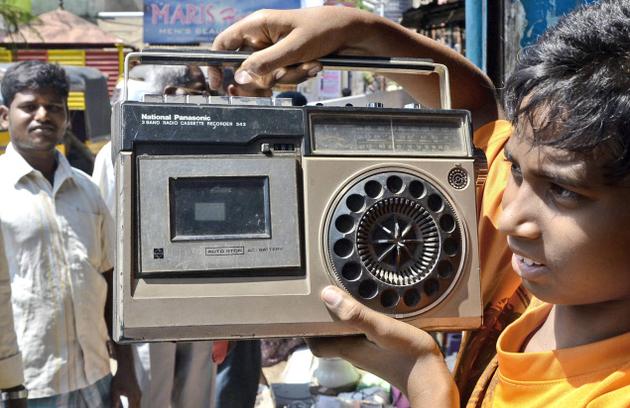
PIECES FROM THE PAST: At the sandhai. Photos: M. Periasamy / The Hindu

Every Sunday for nine years now, Shahul Ameen arrives at 8 a.m. on N.H. Road with cardboard boxes too full to tape shut. He spreads a tarpaulin sheet by the pavement outside a shuttered shop, hoists two poles on the road, throws another tarpaulin sheet over them and settles down in this makeshift shanty to unpack his wares.

Out come worn DVD players, Japanese headphones, mobile phone covers, chargers, ancient tape recorders, rusted sound mixers, dismantled mixies and second-hand CDs. Along the length of N.H. Road, others like Shahul slowly begin setting up the Sunday-only sandhai of second-hand electrical and electronics goods. With his products now neatly ordered and his morning chai downed, Shahul plonks cross-legged on a cane charpai, almost to say, “Let the haggling begin.”
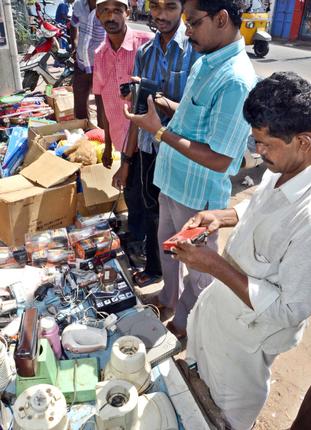
Pic: M. Periasamy / The Hindu

“1,500!” says Babu. “800,” says the customer. “1,300!” snaps Babu. “1,000,” begs the customer. They meet at Rs. 1,100 and the customer walks off with a massive set of boombox speakers, its cloth covering bearing tell-tale holes. “People come here from all over Coimbatore every Sunday because there are at least 20 stalls to choose almost anything electronic from,” says Babu, who’s been a part of the sandhai for five years.

While most other sellers stay on till 8 p.m. when the market officially closes, Babu packs up once he’s made a decent sale. Babu spends his week going house to house in colonies across Coimbatore buying old electronic goods by weight. “Sometimes we buy from kabadi-wallas as well,” he says. Shahul finds his wares through similar methods but frequents exchange melas across the city and outside as well.

Unlike these two, Babu, owner of an electronics service unit just off N.H. Road sells at the sandhai the leftovers from his centre. “I have products which are too old to be fixed, so I bring them here and mechanics and other electricians buy them for the spare parts,” he says. Another hot product is mobile phones and their accessories, both new and second-hand. “Many sellers have small cellphone outlets elsewhere. When they accumulate models which are no longer manufactured or sold by mobile brands, they bring them here and sell it for half-price without guarantee cards,” explains Shahul. “They get rid of their stock and we get mobiles that work,” says Shashidharan, a regular customer at the sandhai for the last five years.

A long shot

It’s a hit-and-miss affair with products here, adds Shashidharan. He once bought a second-hand remote that claimed to work on any television set but didn’t do so. His spoil for today is a clock backlit by fluorescent lights shining through water with floating plastic fish in it. Through the years he’s frequented the sandhai, Shashidharan says he’s seen it expand to include stalls that sell more than just electronics. Some electronic stalls now stock new film DVDs and music CDs; others have cardboard boxes full of old cassettes with Tamil songs and well-used VCD tapes. Those like Pandian have set up stalls selling rubber chappals for Rs. 20, feeding off the sandhai’s constant crowd. “Through the week we sell at Race Course and we bring the excess here on Sundays,” he says. He is accompanied by a chat-walla, mosambi-juice seller and others peddling clothes.

The sandhai gets most of its footfall thanks to the buses that stop on N.H. Road and make their way to the heart of Town Hall. “Each of us gets 90 to 100 customers and altogether at least a 1,000 people come through each Sunday,” says Shahul.

Each stall usually has a huge crowd milling around it, few among them buying though, most just looking to replicate the bargains others make. Eavesdrop on a few conversations and you’ll hear a fair smattering of Hindi, for many migrant labourers from North India come to the sandhai for second-hand products that could make their short stay here more comfortable. Besides those buying, there are those looking to sell old goods too. As we speak, a man offers Shahul a walkman from the 90s. “Not interested,” says Shahul pointing to the walkmans he’s already got to sell. As others stand in the unforgiving heat, peering over Shahul’s wares, he gets himself a lime juice to last him through the second half of this sandhai Sunday.

source: http://www.thehindu.com / The Hindu / Home> Features> MetroPlus / by Esther Elias / Coimbatore, April 30th, 2013
Stuntman down memory lane

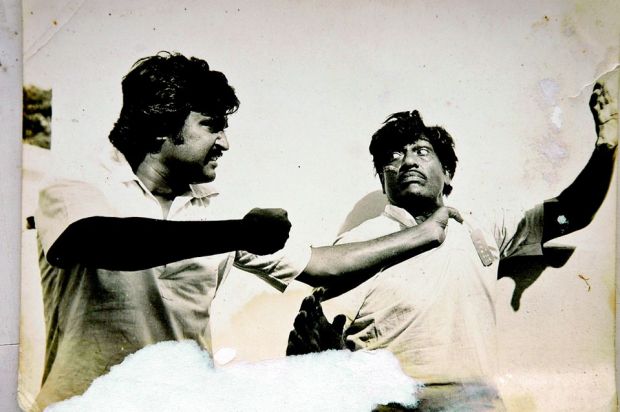
Judo Rathnam with actor Rajinikanth in a Tamil film. / DC

Vellore: 

Stunt master Judo Rath­nam of Gudiyattam, who performed stunts for more than 1,500 films, has now found time to pen his biography in Tamil — Thama­raikulam Mudhal Thalain­agaram Varai which is set  be released on May 3 in Chennai.

“Thamaraikulam was my first film in which I appeared in a small role, and Thalainagaram was my last film, though I am working for two or three films now. Modern Thea­tres Sundaram gave me the chance to become stunt master in Vallavan Oru­van, Vallavanukku Va­ll­a­van and many other films produced in the late ‘60s and ‘70s. I wanted to write my memoirs and it took two years to share them with the public,” said K.K. Rathnam, who was given the title ‘Judo’ by Modern Theatres owner T.R. Sundaram.

Rathnam has done 49 films with Rajini, 16 with Kamal Hassan, 69 with Kannada Rajkumar, 4 with Amitabh Bachchan, 16 with NTR and had worked in a couple of English films. But, he laments, he didn’t get to work with MGR.

“Writer Manohar has written dramatically the instances in my life. As I found the work tedious, I wanted to give up the idea of writing half-way, but my wife R. Govindammal (73) forced me to complete the book.”

His wife Govindammal interrupts, “My husband is very shy. I used to ask him to act in films, but he was adamant about stunt direction.” Rathnam (84) is still agile because he does yoga every day. He has eight, well-settled children.

source: http://www.deccanchronicle.com / Deccan Chronicle / Home> News> Current Affairs / by N. Thygarajan , DC / April 27th, 2013

Tamil Nadu Agricultural University enters into MoU with BCRL

Coimbatore :

Tamil Nadu Agricultural University (TNAU) on Friday entered into a MOU with Bio Control Research Lab (BCRL), the R and D division of Pest Control of India, for a cooperative work in the field of biological control of crop pests and diseases.

BCRL, as part of this Public-priavate Partnership, will help in accomodating TNAU UG students for internships and PG Students to do part aof their research in their lab on topics like Pheromone technology and urban pest management in both education and research, a university release said here.

source: http://www.articles.timesofindia.indiatimes.com / The Times of India /  Home> Education /  by  PTI / April 27th, 2013

US helping India to set up 100 community colleges

Keelakarai :

The US is helping India realise one of its goals of establishing 100 community colleges under a new area of collaboration, Consul  General of US Consulate, Chennai, Jennifer Mcintyre , said today.

Participating at the Founders’ Day celebrations of the  Mohamed Sathak  College of Engineering   here, she said the US also supports India’s launch of a high education web portal to disseminate information on education collaboration and exchanges.

(US helping India to set up…)

She said she expects the number of college and university representatives visiting India to increase manifold in future.

The US representatives were seeking to increase international student enrolment to prepare their graduates for better leadership in the new global economy.

Mcintyre said about a year ago eight grants were awarded for joint studies in the fields of Energy, sustainable community development, environment , education and public health, of which three were given to South Indian institutions.

She also said India has the largest number of Fulbright scholar exchange Programmes worldwide with more than 17,000 fellowships and other grants awarded to Indians and Americans.

“The goal of preparing our youth to meet the challenges of the 21st Century is the one that the US and India share,” she said.

Mcintyre suggested that people in faraway areas like Kilakarai contact USIEF ( United States India Educational Foundation )  through the consul website to get information on education opportunities in the United States.

source: http://www.articles.economictimes.indiatimes.com / The Economic Times / Home> News> News By Industry> Services / April 03rd, 2013

Three legal-aid clinics set up in Madurai

Madurai :

The Madurai District Legal Services Authority (MDLSA) has set up legal-aid clinics (LACs) at the offices of the top civil and police functionaries in the district. They will function three days in a week at the collectorate and in the offices of commissioner of police (CoP) and the superintendent of police (SP).

Madurai district judge B Gokuldass inaugurated the LACs at the collectorate and the police commissionerate on Wednesday. Chief judicial magistrate S Saravanan Perumal unveiled the clinic  at the SP office in the city. Collector Anshul Misra, commissioner of police S Sanjay Mathur, SP T Jayachandran  and secretary of MDLSA sub-judge Jacintha Martin were present.

MDLSA has been establishing LACs at several places in the district to provide basic legal services to the people. They have come up in Madurai, Vadipatty, Usilampatti, Thirumangalam and Melur taluks where people face geographical, social and other barriers for accessing legal services.

The clinic at the district collectorate will function on Tuesdays, Thursdays and Fridays, while the clinics at the offices of city police commissioner and SP will function on Mondays, Wednesdays and Fridays. Each clinic will work with one legal-aid counsel who will be assisted by a para-legal volunteer trained by the MDLSA, said the sub-judge Jacintha.

With the three new LACs, the Madurai city now has 14 LACs, said the sub-judge. Besides, four more clinics will be set up in this weekend, said the sub-judge.

source: http://www.articles.timesofindia.indiatimes.com / The Times of India / Home> City> Madurai / TNN / April 04th, 2013

The engine of growth

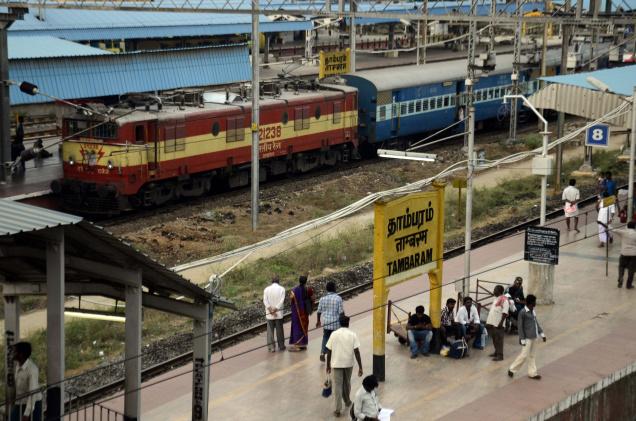
Chugging along: A view of Tambaram railway station. / Photo: M Srinath / The Hindu

The tide turned for Tambaram in 1931 when it got a railway station. Ever since, it has sped down the tracks of development on its way to becoming a bustling mini metropolis, writes K. Manikandan

The Tambaram railway station occupies a pre-eminent place on the suburban electric train map of Chennai. Considering the physical size of the city’s suburban train services and its passenger volumes, this is no mean thing. The railway station was born in 1931, when the operation of electric train services from Chennai Beach got underway. With the advent of the station, Tambaram began to shed its rural character. It became the commercial nerve centre for several dozen villages, near and far. It was chosen as the new place for the Madras Christian College, which was being shifted out of George Town. And yes, the addition of Indian Air Force Station further enhanced Tambaram’s growing significance.

Soon, the five villages of Tambaram, Selaiyur, Irumbuliyur, Kadaperi and Pulikuradu were merged to create Tambaram Municipality. It was under these circumstances Tambaram became the transport hub: probably the biggest outside Chennai’s city limits.

The steadily rising importance of the station seemed to reflect the growth of Tambaram.

For generations, the metre gauge trains connected people to different parts of the city until they were replaced by broad gauge trains in 1998-99. The metre gauge trains were initially operated on a rake of 6 coaches before Southern Railway added 3 coaches to cater to the increasing number of passengers.

Prior to gauge conversion, there were only four platforms, against the present 9. Long time residents of Tambaram will still recall the days when steam engines were in operation, even until the late 1980’s, to shunt goods wagons and even the rakes of passenger trains. A huge turn table, which has now vanished, would be the centre of attraction for all the waiting passengers, those travelling on the narrow foot over bridge and wonder struck school children. Hauling of coal on the steam engines and their subsequent cooling by a massive shower were a delight for children.

Nearly 250 suburban services and about 40 long distance trains operate through Tambaram everyday, transporting several lakh people making it the busiest as well as the highest revenue-earning station in the suburban sector, next only to Moore Market Complex (suburban).

The turn tables have gone along with the steam engines, the manual changing of lines through the railroad switch lever have been replaced by sophisticated signalling systems, the elegant metre gauge rakes have given way to 12-coach broad gauge rakes, yet Tambaram has managed to retain the elegance and charm of its past.

There are still plenty of problems relating to hygiene and sanitation, disposal of waste generated in the platforms, issues related to neatness in the concourse and waiting areas. But greater and brighter days lie ahead, as Tambaram is all set to become a coaching hub for new long distance trains for southern districts of Tamil Nadu.

source: http://www.thehindu.com / The Hindu / Home> News> Cities> Chennai / by K. Manikandan / April 03rd, 2013

TN govt announces satellite city for Madurai

Chennai :

As part of its efforts to meet the growing demand for dwelling units in urban areas, the Tamil Nadu government on Thursday announced a satellite township on the outskirts of Madurai at a cost of Rs 120 crore and proposed to build 4,454 houses in several other districts.

Making a suo motu statement in the assembly, chief minister J Jayalalithaa  said the township would be created some 15 kms away from Madurai along Madurai-Tirunelveli highway near the airport.

The township would be created over 586.86 acre presently owned by Tamil Nadu Housing Board in Thoppur-Uchappatti, she said.

The township would have 19,500 plots to be developed at a cost of Rs 120 crore with basic amenities like drinking water, roads, drainage system, street light, rain water harvesting facilities and parks.

Of this, 14,300, 2,500, 750 and 1,950 plots would be alloted to low, middle, high income groups and economically weaker sections respectively, she said.

The township would be complete with schools, commercial complexes, police station, post office, primary health centre, fire station and upgraded industrial houses funded by Tamil Nadu Housing Board, she added.

The chief minister also announced that 1,500 flats would be built at Sholinganallur here, using ‘pre fab technology’ at a cost of Rs 612 crore.

The 10-storeyed building would have separate sections for low, middle and higher income groups.

“With the using of this new technology (pre fab technology) being followed in Delhi, Mumbai, Bangalore and Hyderabad, the construction time frame be reduced up to 25 per cent and expenditure between 10 and 15 per cent,” she added.

source: http://www.articles.timesofindia.indiatimes.com / The Times of India / Home> City> Chennai / by PTI / April 04th, 2013

Assam poet translates Tamil classic Kuruntokai

Bijoy Sankar Barman | EPS

The Sangam-era Tamil classic, Kuruntokai, has now broken down yet another language barrier. Young Assamese poet Bijoy Sankar Barman, after a struggle of nine years, has managed to translate this classic anthology of 3rd Century Tamil poems to Assamese.

“Beautiful poems from Kuruntokai has enthralled me. I am happy that now our people can also taste the classical Tamil text,” Barman told Express on the sidelines of Northeast and Southern Young Writers’ Meet organised by Sahitya Akademi here on Saturday.

Barman, whose poems had been translated in many other languages, including Bengali, Hindi and Kannada, first came across A K Ramanujam’s English translation of Kuruntokai.

“When I read the poems, I was surprised to find the ecology, love and human relationship that was described in them, happened  to be similar to ours,” said the 33-year-old writer, an employee of the postal department in Guwahati.

Since then, Barman began collecting more details about the Tamil classic.

While he depended mostly on Ramanujam’s translation work of Kuruntokai and other Tamil classics for understanding the Tamil literary tradition, he also read the Sahitya Akademi’s publication on ancient Indian literature.

“For the next nine years, I was re-reading the translations of Kuruntokai to understand the depths of the poems, the expressions of love, the emotions explained by the colours in the poems, before deciding to translate them,” said Barman, who already won the prestigious Munin Barkataki Award.

Currently pursuing a PhD on tribal myths of Assam, Barman feels that the Tamil folk tradition had a lot of similarities with Assamese.

“I am planning to read more classics in Tamil in the near future,” he said, adding that the government should take steps to translate southern Indian literary works to north-eastern languages as it would encourage more people in India towards cross-cultural studies.

Stressing similar points, Karabi Deka Hazarika, an eminent Assamese writer, addressing the writers at the meet, said, “Translation is the only means through which a glimpse of the literary merits of the writings of these areas can be brought within the comprehension of the readers of other linguistic groups.”

Readers of northeastern India had very little opportunity to taste the literary beauty of the writings in Tamil, Telugu, Kannada or Malayalam.

“In Assam, we have lots of translations from Bangla literature, which is an easy target for the translators. But, the same is not happening in the field of Tamil, Telegu or Malayalam literature,” she pointed out.

source: http://www.newindianexpress.com / The New Indian Express / Home> States> Tamil Nadu / by Gokul Vannan / ENS – Madurai / April 28th, 2013

More than just a pinch of salt

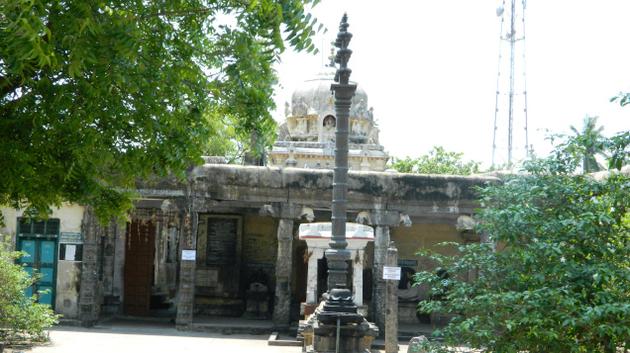
Vignettes From The Past At The Bhoomeswarar Temple. /  Photo: Anusha Parthasarathy / The Hindu
Vignettes From The Past At The Bhoomeswarar Temple. / Photo: Anusha Parthasarathy / The Hindu

We walk through the dusty lanes of the ancient port town of Marakkanam and discover salt mounds and layers of history

So, we fancy ourselves as relic hunters. Since leather pants and utility belts won’t go too well when you’re hunting for history in rural Tamil Nadu (on the brink of a sweltering summer), we stick to capris and cotton tops. About 30-odd kms before Puducherrry, just as we’re breezing through the ECR, the salt in the air mingles with the wind in our hair. We have reached our destination; Marakkanam.

At first sight, it doesn’t look like there’s much to this town. Bullock carts block traffic, two-wheelers whiz past carrying huge loads and there seems to be no conceivable way to the sea, even if this is an ancient trade port and now, a fishing village. But soon, we discover there’s more to Marakkanam.

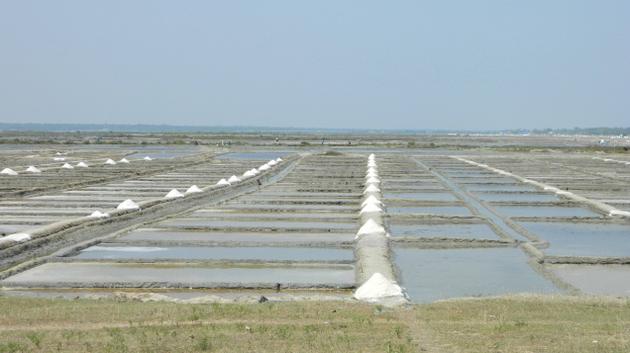
If you take one of the smaller routes just off the main roads and drive down, you see yourself stranded in the middle of mountains of rock salt; these shimmering mounds reflect light and are an absolute sight at close range. And just beyond this mound, you glimpse the panoramic world of salt pans. Square grids with salt mounds in between; people working in groups, the motor chugging along and at a distance, the traffic whirring past at breakneck speed; for a surreal moment, you wonder if you’re stuck in a Murakami novel before a thimble of salt brings you crashing back to reality.

Vignettes From The Coast The salt pans. / Photo: Anusha Parthasarathy / The Hindu

Just beyond the salt pans are boat shops. While it’s rather odd to catch fishing boats stranded on land, you’ll find carpenters and others hard at work to put them back in the waters. Boat repair work shops are big in this area.

This brings one to Marakkanam’s significance as an ancient sea port. In the Sangam age, a lot of trade was being carried out with the Greek and Roman kingdoms. Among the major ports around this time that Ptolemy mentions are Mylarphan (Mylapore), Poduke (Arikamedu), Soptana (Marakanam), and even Comari (Kanyakumari). This port even features in Tamil works such as Sirupaanaattruppadaiand Perumpaanaattruppadai as Eyirpattinam.

In an excavation that took place in 2005-2006 near the Bhoomeswarar temple copper coins, terracotta pipes, copper rings, porcelain shards and iron objects dating to medieval periods were unearthed. We’re trying to find the excavation site (or its remains) but the flower seller outside the Bhoomeswarar temple throws us off course. “The only thing that’s been dug out here and cleaned recently was the temple tank,” she says dismissively, before trying to sell us jasmine flowers.

The temple seemed a more inviting option, even if the sanctum sanctorum remained closed in the afternoon. While the outer façade seems like it was painted recently, the interiors inside wear their age on their sleeve. Built during the Chola period, the intricate stone carvings on the pillars and its weary walls are reminders of another age. There are smaller enclosures inside and any lover of mythology and religion can spend hours dissecting the many stories of Shiva that are etched on them.

Outside the temple, we find a rundown façade that is shrouded in overgrown foliage. The old chariot platform lies in ruins, its arches mere bricks holding themselves together. “In the old days, people would climb up there to enter the ther,” the flower seller pipes up again, holding up a jasmine garland hopefully. But we walk away with a shake of our heads, our hunt coming to a close.

***

Getting There

Marakkanam is about 120 km from Chennai and 35 km from Puducherry. It can be reached by bus or car.

What Not To Miss

The salt pans are a must see. Also visit the Boomeshwarar temple.

Where To Stay

Puducherry, Mahabalipuram and Chennai have good accommodation.

source: http://www.thehindu.com / The Hindu / Home> Features> MetroPlus> Travel / by Anusha Parthasarthy / April 25th, 2013

Quarrying may powder Chola era stone inscriptions at Sankaranmalai


Stone inscription during the period of third Kulothunga Cholan, which were discovered at Sankaranmalai situated at Chithalavai panchayat near Manayanur | Express Photo

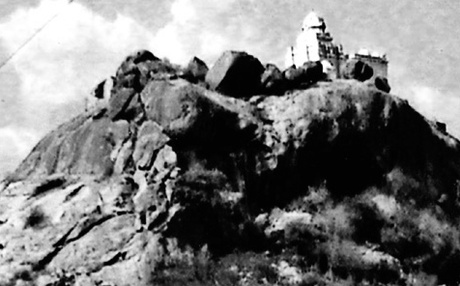
Stone quarrying activities in the vicinity of the Sankaranmalai hill located at Sankaranmalai of Chithalavai panchayat near Mayanur here, has threatened the 900-year-old historic later Chola period era inscriptions found here.

Locals here complain that large quantities of stones required for road-laying work nearby, was quarried from this hill. This would add to the damage of the ancient inscriptions if quarrying continued, besides spoiling the ecology of the place, they fear.

The inscriptions of Kulothanga-III of the 12th century, portraying his decree was discovered recently in the Sankaranmalai hill. The hill also boasts of a Siva temple at its top, which contains inscriptions of Kulothunga-III and the Pandya King, Veera Pandyan. The Sankaranmalai hill is situated at Madukarai, the boundary of the erstwhile Chera and Chola territory. Karur, earlier called as Thattaiyur, was under the rule of chieftain Kallingarayan, who was a representative of King Kulothanga in 1190 AD.

Inscriptions engraved in the rocks explain the devotional care of the Chola and Pandya kings to maintain the dilapidated Siva temple on top of the hill, and to regulate religious work. The inscriptions throw light on the religious and cultural practices of Tamils, besides the administrative system and the history of the period.

The Chola king who ruled from his capital at Thanjavur had ordered Kallingarayan to maintain and regularly perform religious rituals in the temple. It shows the works were handed over by Kallingarayan to Katchirayan, a chief of this particular location.The inscriptions composed of 42 lines embedded on a vertical rock facing south of Sankaranmalai says that in 1190 AD, the reign of Kulothunga-III, the historic temple located at Sankaranmalai was dilapidated. The inscription also has the orders of the King to maintain the temple by collecting taxes and proceeds from the wetlands, drylands, ponds, gardens, wells and trees within its boundaries, to provide sweets, fruits, and food to the temple and to perform rituals. For oil offering such as sesame and mango; taxes for coconut tree, palm tree, oil crusher and rock could be levied, states the King’s order.

As per the order of Kallingarayan, Avur Kanakan, the accountant, could engrave it on the stones and metals. He could cultivate the temple lands placing four trisulam around the temple lands – inscripted by Katchirayen and Viluparaiyan.

In 1196 AD, Kallingarayen reviewed the functioning of the temple and was satisfied with its maintenance. Then he had engraved the accomplishment of the order announced by the Chola king.

At the bedrock of the hill, inscriptions engraved by the Pandya king during 1218 AD can be found.

source: http://www.newindianexpress.com / The New Indian Express / Home> States> Tamil Nadu / by S Godson Wisely Dass / ENS – Karur / April 05th, 2013