Rotary Club Award for Irai Anbu

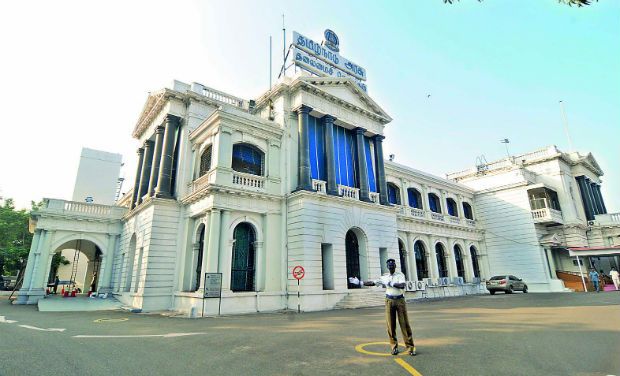
V Irai Anbu, Principal Secretary, Personnel and Administrative Reforms, has received the ‘For the sake of honour’ award from the Rotary Club of Madras Vadapalani.

Shanthi Selvam, president of the club, presented the award to Irai Anbu for his noble contribution to the student community, at a function here on Thursday. “The cause is more important than the goal,’’ said Irai Anbu, in his acceptance speech.

At the same event, Dr Jothi Clara J Michael and Shurthi Jauhari were honoured with the ‘rotary vocational excellence awards’ for their exemplary services in the field of nursing and Hindustani music, respectively.

Sarada Venkatraman, a Carnatic musician of Ashok Nagar was also awarded with ‘Rotary Appreciation Award’ for her excellent service to the women and kids. “Music and art enrich every person, so every child has to be trained in any one of the fine arts,’’ observed Sarada.

source: http://www.newindianexpress.com / Home> Cities> Chennai / by Express News Service – Chennai / March 23rd, 2013

New locomotive a treat for NMR’s travel enthusiasts

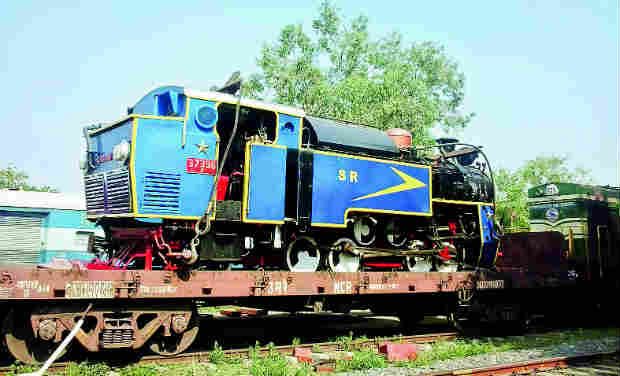
LocomotiveCF24mar2013

The third indigenously built locomotive for Nilgiri Mountain Railway arrives at Mettupalayam. —DC

Ooty:

The third indigenous steam locomotive desig­ned for the Nilgiris Moun­tain Railway (NMR) and manufactured at Gold­enrock in Tiruchy arrived at  the Mettupalyam railway station at the foothills of the Nilgiris Friday afternoon.

It will be subjected to trial runs on the NMR track before being commissioned for regular service. The  railways decided to manufacture indigenous steam locomotives in 2010 for the NMR that has been accorded world heritage status on account of its long innings in the hills,  to replace  in a phased manner its four old steam locomotives that often developed technical snags and made the train journey up the mountain unreliable in the past.

The first indigenous locomotive manufactured at Goldenrock was  inducted into the NMR in March 2011 and the second, in March 2012.  While the first initially developed technical problems, the railways were able to resolve them.

The second in the series has been trouble-free so far.The third indigenous steam locomotive for the NMR , built at a cost of `4 crore, is oil-fired like the other two.  It will be taken on a trial run in the racked NMR sector between Mettupalayam and Coonoor next week before being inducted.

K.Natarajan, president of the Heritage Steam Chariot Trust, an organisation of NMR aficionados, hailed the railways for making the effort to upgrade it and and hoped the new locomotives would help the NMR make more trips up the hill.

source: http://www.DeccanChronicle.com / Home> News> Current Affairs /  DC / by B. Ravichandran / March 23rd, 2013

An old man and his faith

BirdCF23mar2013

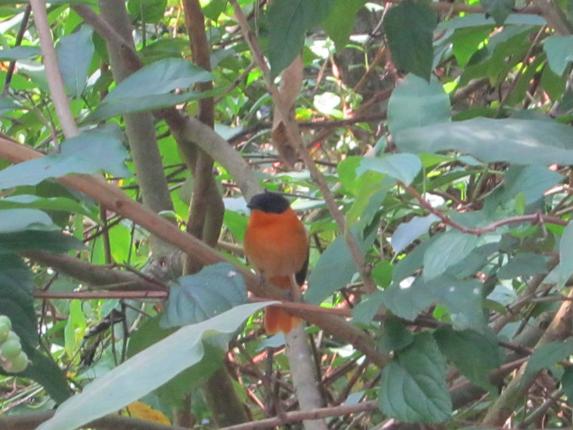
Orange flycatcher / by Special Arrangement / The Hindu

HonattyCF23mar2013

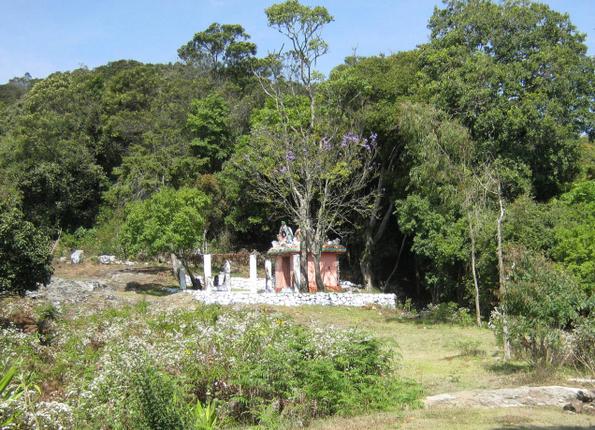
The temple at Honatty / by Special Arrangement / The Hindu

Serenity, birds and a reminder of mortality is what Pankaja Srinivasan get at this middle-of-nowhere temple in Honatty

At Donnington Circle in Kotagiri, we fuel up with sweet tea, (the way only chai kadais in the hill stations know how to make) and pakodas at ‘Adengappa’. M. Sivalingam is turning this way and that to get a signal on his mobile. He is fixing up with someone at Honatty who will take us to a small 200-year-old temple, hidden from tourists. Sivalingam is a sought after guide for serious birders, and knows the Nilgiris like the back of his hand.

It is sunny but the air is crisply cool and there are trees everywhere. So different from Coimbatore, where we began our journey in the morning, where there are dug up roads, uprooted trees, dust and heat.

We take the Keezh Kotagiri Road towards Kodanad. Sivalingam explains how each area of the Nilgiris has a species specific to it. We listen to the Nilgiri Laughing Thrush. “You find a lot of them at Doddabetta. They come for the garbage,” he says, sadly. When we wax lyrical about the Nilgiris, he says there is no real reason to rejoice. “I remember trees laden with oranges, peaches, plums and pears. Visitors to the village would go back with baskets of fruits. There is not a single fruit tree in my village now,” he says.

We pass tea factories built by the British, patches of forests, then ominous patches of cleared land (for resorts to come up). Then, it is back into cool glades and unkempt roads, till we bump to a halt at a clearing near a village, Honatty. Seventy-year-old Madhan takes us to his temple. “My grandfather built it; so, it is more than 150 years old,” he says, and points upwards. Not to the heavens, but the path we have to take!

There are no steps, just rocks and loose mud underfoot, and bushes and trees to act as handrails. Just over half a kilometre, Sivalingam assures me. To my panic-stricken eyes, it looks like a vertical climb. But climb we must, because hidden, on the other end, is the temple. Madhan does this trip twice a day to light the temple lamp. I wheeze gratefully to a halt when Sivalingam points out splotches of scarlet rhododendrons that grow only in the Nilgiris and in the Himalayas. He plucks a berry and invites me to taste it. It is delicious. He points to the branches of a tree and says, “Malabar Giant Squirrel!” I try to spot it. All that green has confused my eyes, but a sudden orange streak, and there it is! Eating berries.

At last, level ground, and it takes my breath away. A clearing that is fenced in. We leave our footwear and step onto a carpet of grass. We can see the temple in the distance, but Madhan insists we sit down for a while. We do, just outside a circle of stones that encloses a jamun tree, at the base of which is a small stone. An ancient god, says Madhan. We sit in silence. Madhan’s grandfather cleared up a patch of dense forest and built a temple that was nothing more than a grass structure. His eyes fill with tears as he speaks of the hardships his grandfather faced, and the faith he reposed in God that kept him close to the temple.

He asks me how old I am and when I tell him, he says, “Oh, so more than half your life is behind you.” Chastened, I scramble up to pay my respects to Ranganathar. And, I am rewarded by another glimpse of a Malabar Giant Squirrel that takes my mind away from my mortality. Bears, gaurs and tigers are regular visitors here. They live in the dense forest that surrounds us. Madhan has encountered them often enough.

Madhan hopes his son will continue to look after the temple after him. No one comes here. But, he is delighted that just two years ago, he managed to make the temple pucca. If he lives long enough, he would like to have a small feast and invite the nearby villagers. But he too is worried about the shrinking forest cover and the water shortage.

Is Madhan’s temple worth documenting? May be not. No kings or famous people have patronised it. And 150 years old is not that ancient in our culture. But, it still stands only on an old man’s faith, because he thinks it is God’s will. There are no hundis, no priests. Just enormous calm and peace. Isn’t that what places of worship are meant to be?

We start our descent, Sivalingam nimbly, and I with more caution than grace. Climbing down is more difficult, I discover. But we stop every now and then. Sivalingam holds up his hand, asking me to hold still. He takes out his mobile phone and plays the call of a flycatcher. And to my utter delight, out hops a bird, head cocked to one side looking for its mate — the Black and Orange Fly Catcher!

Getting there

From Donnington in Kotagiri, take the Keezh Kotagiri road towards Kodanad. After about four km at the S. Kaikatti Junction take the Solurmattam route towards Honatty.

What not to miss

Sit at the temple clearing and listen to birdsong.  Not too far is the Kodanad View Point.  And, Ooty and Coonoor are just a drive away.

source: http://www.TheHindu.com / Home> Features> Friday Review > History & Culture / by Pankaja Srinivasan / March 21st, 2013

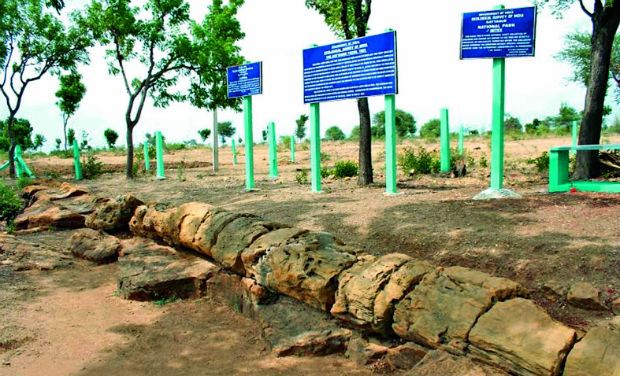
Rs 2 crore fossil museum in Ariyalur

AriyalurCf22mar2013

Chennai:

The state budget on Thursday announced an infra package for the tourism sector at a cost of Rs 68 crore and also announced a special fossil museum in Ariyalur at a cost of Rs 2 crore. The total budget for the tourism sector will be Rs 153 crore for the ensuing fiscal.

Further an amount of Rs 10 crore from the state’s fund will be allocated for the publicity works for ‘Destination Tamil Nadu 2014’, the budget read.

Tourism spots in eastern and southern tourist circuits will be reviewed and improved and financial assistance for these projects will be availed through Asian Development Bank up to Rs 450 crore, the budget said.

source: http://www.DeccanChronicle.com / Home> News> Current Affairs /  DC / March 22nd, 2013

Several sectors get boost in the budget

ChennaiCF22mar2013

*Compensation of Rs 15,000 per acre for drought-hit farmers in Cauvery delta.

*12,000 milch animals and 6 lakh sheep and goats for 1.5 lakh poor women.

*Rs 50 crore for water conservation and canopy improvement programme
*Special project for eco- restoration of rivers and water bodies under Chennai River Restoration Trust (CRRT)
*New ship building yard at Thoothukudi
*Creation of 25000 acres of land bank
*Special incentive package for MSME
*Rs 10 crore for promoting rural BPOs
*Four grade separators to be installed at a cost of Rs 271 crore
*600 MW thermal power station in North Chennai to be commisioned by may 2013
*Rs 2000 crore for highways development programme
*Creation of State Highways Development Authority
*60,000 solar-powered green houses
*Rs 750 crore allocation for Metrorail
*Rs 2 crore grant for Tamil University in Thanjavur
*Rs 250 crore World class ocenarium at Mammalapuram
*Study on multi modal transport integration to be taken up in the city.
*Solar installations for government buildings at a cost of Rs 11.7 crore
*Rs 750 crore for village infrastructure
*Special health insurance scheme for pensioners
*Comprehensive health insurance scheme for  Lankan Tamil refugees
source:  http://www.DeccanChronicle.com / Home> News> Politics / by DC / March 22nd, 2013

The lives of others

OotyCFone20mar2013

The Stopover is a ‘photo-fiction’ that tells real stories through photographs and imaginary characters

After 12 years in the corporate world, he quit to do “something I’m passionate about”. He travelled, discovered true love in photography, and signed up for a full-year course at an academy in Udhagamandalam. Looking for subjects to complete his assignments, he fell in love again — this time with the life and culture of the ancient Toda tribes, whose settlements dot the beautiful Nilgiri hillscape. “After this there was no going back,” says Ram Prakash. “I had to tell the world the story of the Todas.”

Along with his friend Deepa Pinto, he visited Toda homes, listened to them, attended their ceremonies, took notes, and clicked pictures for two months. Deepa wrote that story and then three more, set in different locations. The stories and photographs picked from a collection went into a book. It just had to be called The Stopover.

OotyCFtwo20mar2013

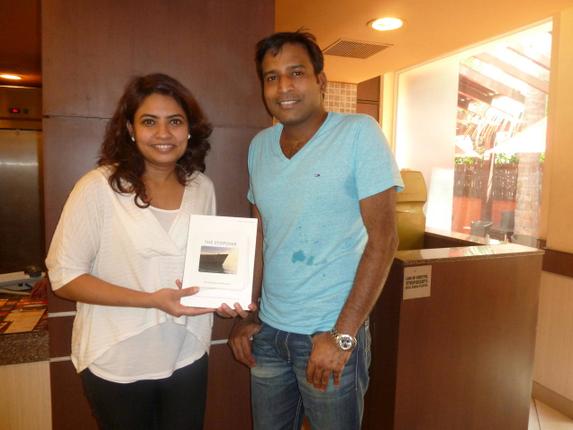
      Ram Prakash and Deepa Pinto with their creation   /   The Hindu  

Unusual is one way to describe the book. Another would be, ‘a travelogue, historical record and brochure blended to text-book size’. The book’s content is woven into stories with fictional characters. These men and women populate the plots, sub-plots and situations created by the authors to talk about the real hopes and aspirations of the people they represent. The photographs support the facts and arguments the authors place before the readers.

TODA TALES

“I chose the Todas because I felt they were not understood well,” said Ram. In The Sun Shines Forever— one of the four stories in the book — the woman visitor to the Toda settlement is told their temple is not a ‘dairy temple’ as is commonly presumed; their marriage is solemnised, but the festivities are reserved for the time the woman conceives; they do not encourage outsiders into their families — that is how they’ve preserved a cherished way of life for centuries… The Tibetan story talks of the tenuous hope these brave people live on, the one on the life of Channapatna toymakers describes their struggle to sell their child-friendly products, and the Kolathur narrative on fish-breeding questions the right of people to confine ornamental fish in ill-equipped tanks. “I wanted to tell the story from the fish’s perspective,” says Deepa. “Well, if you want the fish confined, please do it the right way.”

FREEDOM OF IDEAS

The photographs, often stunning, underwrite the stories without ever revealing a face, since “faces of real people would get mixed with the fictional characters”. In one interesting frame, torchlight and long exposure highlight different parts of the assemblage. “The book gave me the freedom to play with ideas,” says Ram.

So what do you call this genre, asked the publishers. Fiction? Coffee table? The authors call it photo-fiction. “Its commercial viability was questioned, and I was asked to bunch the pictures together,” says Ram. Once they decided to publish it themselves, friends pitched in with design, layout, size of the book etc. “Theatre personality Arundhati Nag invited us to showcase ‘photographs, facts and fiction’ from the book at Ranga Shankara’s gallery in Bangalore. Nandita Das and Shekar Kapur have called it social photography.”

Writing those stories was a somewhat life-changing experience, says Deepa. It was a chance to travel, get to know people and cultures. She has turned vegetarian, “and a more open person. I have learned to look beyond what is obvious”.

We hear more Stopovers are on their way.

For details, visit www.thestopoverbook.com.

source: http://www.TheHindu.com / Home> Life & Style / by Geeta Padmanabhan / March 18th, 2013

Nod for 2 Tamil subjects in SPM

COMMUNITY’S REQUEST: Najib says students can take Tamil language and literature for total of 12 subjects

Klang :

PRIME Minister Datuk Seri Najib Razak announced yesterday that secondary school students could now take two  Tamil subjects in the Sijil Pelajaran Malaysia (SPM) examination, resolving the long-standing request by the Indian community.

These are among the initiatives taken by the ruling coalition to meet the Indian community’s requests, in addition to other socio-economic efforts which are being carried out to alleviate the burden faced by the community.

Speaking to a 50,000-strong crowd at a meet-the-people gathering themed “Pilihan Rakyat” (People’s Choice), organised by MIC, he said there should be no problems if students wanted to add Tamil language and Tamil Literature for their SPM from now on.

“They can now take a maximum 12 subjects, including Tamil language and Tamil Literature. No problem with that,” he said, to thunderous applause from the audience.

He also emphasised the ruling coalition’s priority on job opportunities and also places of worship, which he said the Parti Keadilan Rakyat-led Selangor government had failed to deliver.

“Since the last election in 2008, we haven’t demolished any temple. Instead, we have given numerous allocations for countless temples and Indian associations.

“Compared with the opposition, in Selangor, they have demolished seven places of worship, including a private temple in Sepang.

“Why would they do such a thing? Don’t the Indians have the right to pray at their own place?

“If BN takes over, we will never do that.”

Najib noted a huge achievement by the Federal Government where it had resolved close to 7,000 cases of stateless Indians in the country.

“We have given allocations, such as giving out loans to Indian entrepreneurs. About RM58 million has been distributed to small and medium enterprises.”

He added that judging from the many initiatives, the Indian community should throw its support behind the ruling coalition in the coming election so it would continue to implement transformation for the country.

“We learnt a bitter lesson in the 2008 election. I know that the voters did not want the opposition to win (in the last election).

“They only wanted to send us a message that BN has to change, and that is what we did.

“For the past four years, we have been bringing changes after changes, programmes after programmes, allocations after allocations to help the Indian community. And we know the people want us to do more.”

This, he said, was proof that BN’s promises to the people had been fulfilled, unlike the opposition’s unkept promises which he described as “Janji tinggal janji” .

“Look at their (recently launched) election manifesto. Those are not promises. If there’s no promise, what’s the value? There’s no value at all,” he said to loud cheers from the crowd.

Najib also said the “mood” within the BN camp was encouraging, as it had received overwhelming response at their gatherings, indicating the people’s strong support for the ruling coalition.

“I was in Kelantan recently, and its ‘Gelombang Merah’ was so strong and we have a good chance to end Pas’ administration in the state.”

Not only would the show of support be an indicator of victory, Najib said that it would translate to the support given to him as prime minister.

“This will be the first time I will be contesting to get the mandate from the people as prime minister and the first time I will need your full support so that I can continue my work as prime minister because we have big plans in store.”

He said government’s transformation agenda would be crushed if no support was given.

“Moreover, the opposition’s manifesto did not mention anything specifically about the Indian community.

“They tried to fool the people. But this time, we are confident that the Indian community will be with us. Tomorrow will be ours and tomorrow BN will shine and will go forward with the support from the Indian community.”

Earlier, Najib announced that he was adding another RM10,000 to MIC’s RM90,000 in funds which were collected by the party for the fallen heroes in Sabah.
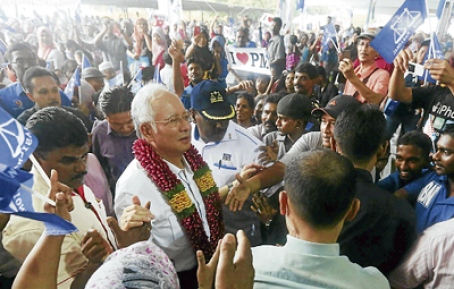
MalaysiaCF19mar2013

Prime Minister Datuk Seri Najib Razak meeting with the people at SMK Meru in Klang yesterday. Pic by Syarafiq Abd Samad

source: http://www.nst.com.my / New Straits Times / By Ahmad Fairuz Othman  &  Rahmah  Ghazali / news@nst.com.my / March 18th, 2013
Vellore set to get modern stainless steel bus shelters

Under Vellore Corporation’s new project, the city will soon have modernised stainless steel bus shelters, to be carried-out at an estimated cost of `3.5 crore.

“This effort is part of developmental activities aimed at refurbishing the city as it has been upgraded into a Corporation in August 2008,” said Vellore Mayor P Karthiyayini.

“Modernising the bus shelters and leasing out the space for advertisement will increase the revenue of the local body,” she added. This will also address the traffic problem caused by the increasing number of hoardings at the bus shelters, she noted.

Town Planning Officer M Kannan said, “A total of 102 bus shelters, including 15 new shelters near Sarathi Maaligai commercial complex, have been identified under the project. It would be carried out under the Build-Operate-Transfer model, through which the contractors will construct the shelters according to the design specifications of the civic body, operate it for a certain period and then transfer it to the Corporation.”

The new shelter will have stainless steel roofing with steel seating arrangement, apart from facilities including digital boards to display the bus schedule. This is similar to the shelters on the Marina Beach Road in Chennai, he said.

The renovation work originally began in 2011. Since no bidder came forward to take up the tender citing high costs, stainless steel shelters were planned in around 50 important locations and main roads, each at a cost of around `5 lakh, while mild steel shelters each costing around `2 lakh were planned for the interior areas, Kannan added.

A resolution regarding the modernisation of the bus shelters has already been passed at the Traffic Committee Meeting and the work would start soon, after an approval and a designing specification for the bus shelter was received from the Commissionerate of Municipal Administration, he said.

source: http://www.newindianexpress.com / Home> States> Tamil Nadu /  by Express News Service – Vellore / March 17th, 2013

IT employee gears up to join Army

KrishnamurthyCF17mar2013

Chennai:
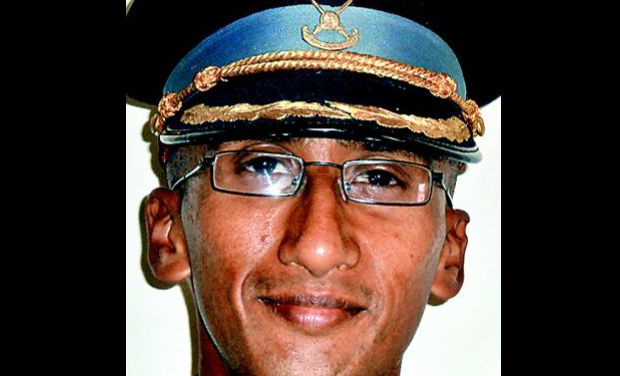
After working for three ye­ars at TCS as a software engineer, Ooty’s B. Kris­h­namurthy (26) is all excited to don the olive green uniform and join the 43rd medium regiment at Ajmer as a lieutenant next month.
Ready to pass out from the Officers’ Training Acade­my (OTA) on Saturday, Krishnamurthy spoke to DC about his experiences in the OTA, the difference between IT job and serving in the armed forces, the lack of awareness about army in TN and how it feels to be the first uniformed person in his family.
“I was attracted to the armed forces right from my childhood days as the Madras Regiment was stationed at Ooty. But as like all youth, I did computer science engineering and took up a job with TCS. But during recession time, I decided to move towards my first love. I cleared Service Selection Board examination in my first attempt and joined OTA. Wearing the olive green uniform gives me tremendous happiness. I want to reach the top in my desired profession and continue serving the country even after my retirement,” said Krishnamu­rthy, who excelled in running and general academics during the 11-months course at OTA.
“When I joined the course, I struggled physically because I was not used to physical activities. My IT job was more sedentary and we used to have snacks and tea at 4 pm in our office, while at OTA I was busy playing sports. But with rigorous training I was able to compete with even the NCC cadets in a span of three months,” reminiscenced Krishna­mur­thy, who noted that discipline and comradeship comes naturally to the cadets. “I used to wake up only after 8 am during my TCS days, but now even when I am at home, I am not able to sleep after 3.30 am,” he added.
Only child of K. Bala­chandran, who retired as section officer at Hindus­tan Photo Films, and schoolteacher Kalyani, Krishnamurthy wants more youth to join armed forces from Tamil Nadu.
“When I first met a few north Indians at OTA, they explained to me everything about the course. I was not even aware of the basics. It showed how much we lacked in knowledge about the army,” he added.
For one, who had not ventured out of the state except for a lone visit to Shirdi, Krishnamurthy got a mix of entire India at OTA and has now mastered Hindi too.
source: http://www.DeccanChronicle.com / Home> News> Current Affairs / DC  / by S. Sujatha / March 16th, 2013

TN girl is GATE biotech topper

deepaCF16mar2013
Chennai:
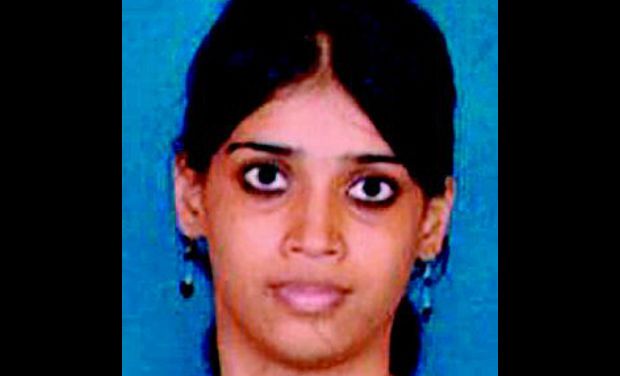
A final year B.Tech student of the SASTRA University, Thanjavur, Deepa Rajagopalan, has bagged the all India first rank in biotechnology in GATE this year.
The res­ults were released Fri­day morning by  the Indian Institute of Tech­nology (IIT), Bombay, which coordinated GATE.
With a score of 80, Deepa has emerged first amongst the 16,159 candidates who appeared for GATE-2013 in the biotechnology str­eam. “Although I’ve been preparing for the past three years, I put in a lot more effort  from Dece­mber last year and my two internships at the Indian Institute of Scie­nce (IISc), Bengaluru and University of Michi­g­an, too helped me in writing GATE,” said an elated Deepa.

AP students ace tech aptitude test

Hyderabad: Students from Andhra Pradesh have outdone their peers in other states in the Graduate Aptitude Test in Engineering (GATE-2013) results announced on Friday.

AP had the most number of students declared qualified at 22,746. The second place went to Uttar Pradesh (22,400), followed by Mahar-ashtra (9,951), Bihar (9,820) and Kerala (8,992).

Pune student Rohit Ronge, who took the exam from Hyderabad, secured All-India First Rank in Instrumentation Engineering.

AP student Chakradhar Reddy secured sixth rank in the Electrical Engine-ering while Parth Lathigara, also from AP, secured 10th rank in the Electro-nics and Communication Engineering stream.

Out of the 9,84,855 candidates who took the exam 1,36,699 have qualified which is 13.88 per cent.

Among the candidates who qualified, 72,125 belong to General category, 41,237 to OBC-NC, 18,936 to SC, and 4,401 to ST category. There were 1,136 physically challenged candidates who qualified in various categories.

The online exam for 2,02,223 candidates, in 15 papers, was conducted in 572 centres spread over 123 cities across the country, on January 20. The offline exam for 9,98,505 candidates in the remaining six papers was conducted in 992 centres in 183 cities and towns on February 10.

“Aspirants in Civil Engineering increased substantially this year to 67,472 from 36,000-odd last year,” said Aditya Reddy of GATE Forum, a popular coaching institute.
source: http://www.DeccanChronicle.com /  Home> News> Current Affairs / DC / by N. Arun Kumar / March 16th, 2013